Why We Do It!

To Serve & Protect the Lives and Property within our Community.

About the Nichols Volonteer Fire Department

The Nichols Joint Fire District and Wappasening Hose Company proudly protects an area of 34.21 square miles within the village & Town of Nichols, New York. We operate out of one station that protects a primarly rural area. Our department is a public department whose member are on a all volunteer status.

Located about 30 miles west of Binghamton in New York's Southern Tier area, the Nichols VolonteerFire Department provides Fire Protection & Rescue, EMS, and Fire Police services to a combine Village and Town fire district. Organized in 1908, the Nichols VolonteerFire Department is an all-volunteer organization.


Wednesday, November 9, 2011

Thanksgiving is peak day for home cooking fires

NFPA urges caution when preparing holiday meals

November 9, 2011 – The number of home cooking fires on Thanksgiving Day was three times the national average of fires per day in 2009, according the National Fire Protection Association (NFPA.) NFPA is urging the public to keep fire safety in mind when preparing holiday meals.


“Thanksgiving can be a whirlwind of cooking and entertaining guests,” said Lorraine Carli, vice president of communications for NFPA. “With so much multitasking taking place, fire hazards around the oven or stovetop can easily be overlooked. Cooks should be conscious of fire safety this Thanksgiving whether the menu is meant to serve two or 20.”

Cooking fires are the number one cause of home fires and related injuries. In 2005-2009, U.S. fire departments responded to an estimated average of 155,400 home fires per year involving cooking equipment. These fires caused an annual average of 390 civilian deaths, 4,800 civilian injuries, and $771 million in direct property damage.

Thanksgiving safety tips
Download NFPA's Thanksgiving safety tips. (PDF, 868 KB)
To reduce the risk of cooking fires this holiday, NFPA recommends the following safety tips:
  1. Keep anything that can catch fire such as oven mitts, wooden utensils, food packaging, towels or curtains away from the stovetop.
  2. Always stay in the kitchen while frying, grilling, or broiling food. If you have to leave the kitchen for even a short period of time, turn off the stove.
  3. When simmering, baking, roasting, or boiling food, check it regularly, remain in the home while food is cooking, and use a timer to remind you that you are cooking.
  4. Stay alert. If you are sleepy or have consumed alcohol, don’t use the stove or stovetop.

If you have a cooking fire…

  1. Just get out! When you leave, close the door behind you to help contain the fire.
  2. Call 9-1-1 or the local emergency number after you leave.
  3. If you try to fight the fire, be sure others are getting out and you have a clear path (to your way out of the home and someone has called the fire department).
  4. Keep a lid nearby when cooking to smother small grease fires. Smother the fire by sliding the lid over the pan and turn off the stovetop. Leave the pan covered until it is completely cooled.
  5. For an oven fire, turn off the heat and keep the door closed.

About the National Fire Protection Association (NFPA)
NFPA is a worldwide leader in fire, electrical, building, and life safety. The mission of the international nonprofit organization founded in 1896 is to reduce the worldwide burden of fire and other hazards on the quality of life by providing and advocating consensus codes and standards, research, training, and education.

Sunday, November 6, 2011

Nov. 9 Nationwide Test of the Emergency Alert System (EAS)


FEMA and the FCC will conduct the first nationwide test of the Emergency Alert System (EAS) at 2 pm eastern time on Nov. 9; the alert will be transmitted throughout the country and will be monitored by EAS participants. After it has been completed, EAS participants will report to the FCC on the results. Although the nationwide test may resemble the periodic monthly EAS tests most consumers are familiar with, consumers may see or hear some differences.

Wednesday, October 26, 2011


It is time to reset your clocks! This year, Daylight Savings Time officially ends on Sunday, November 6, 2011 when clocks are set back one hour at 2:00 a.m.

After turning the clocks back one hour, spend part of the hour gained to change the batteries in smoke and carbon monoxide detectors in the home.

Test those smoke and carbon monoxide detectors also for that monthly test.

The USFA notes, "One of the best ways to protect yourself and your family is to have a working smoke alarm that can sound fast for both a fire that has flames, and a smoky fire that has fumes without flames. It is called a ‘Dual Sensor Smoke Alarm.’ A smoke alarm greatly reduces your chances of dying in a fire."

It simple, the only good smoke detector is one that works. BEEP-BEEP-BEEP A Sound You Can Live With! Learn Not To Burn, Be Fire Safe!

Tuesday, October 25, 2011

Halloween Fire Safety Tips


Halloween is approaching fast. Here are some fire safety tips from the National Fire Protection Association presented by the Nichols Fire Department:


First, begin thinking safety. When choosing a costume, stay away from billowing or long, trailing fabric. If your child is wearing a mask, make sure the eye holes are large enough so they can see out.

Provide children with flashlights to carry for lighting or glow sticks as part of their costume.

Dried flowers, cornstalks and crepe paper are highly flammable. Keep these and other decorations well away from all open flames and

heat sources, including light bulbs, and heaters.

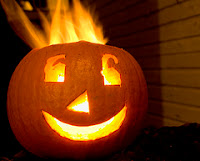
It is safest to use a flashlight or battery-operated candle in a jack-o-lantern. If you use a real candle, use extreme caution. Make sure children are watched at all times when candles are lit. When lighting candles inside jack-o-lanterns, use long, fireplace-style matches or a utility lighter. Be sure to place lit pumpkins well away from anything that can burn and far enough out of way of trick-or-treaters, doorsteps, walkways and yards.

Keep exits clear of decorations, so nothing blocks escape routes.

Tell children to stay away from open flames. Be sure they know how to stop, drop and roll if their clothing catches fire. (Have them practice, stopping immediately, dropping to the ground, covering their face with hands, and rolling over and over to put the flames out.)

Use flashlights as alternatives to candles or torch lights when decorating walkways and yards. They are much safer for trick-or-treaters, whose costumes may brush against the lighting.

If your children are going to Halloween parties at others’ homes, have them look for ways out of the home and plan how they would get out in an emergency.

Happy trick-or-treating!

Sunday, October 2, 2011

Proper Escape Plan Becomes Essential

The fire prevention saying of “Play it safe, Plan your escape” has a lot of meaning for everyone’s daily routine. It’s usually during the month of October that schools and places of work hold yearly fire evacuation drills.

Usually we walk into a building the way we leave, through the main entrance. “No big deal,” most will say, “we do this when entering any building, even our homes.”

What if, and it has happened, this path of travel through the main entrance is blocked because of a fire? What do you do then?

A proper plan of escape now becomes essential. Preplanning maximizes a safe escape and is part of everyone’s daily fire prevention duties.

It only takes a moment to do a quick survey, upon entering a building, and plan an escape. Knowing two exits out of a building requires nothing more than a glance around. You can also try getting in the habit of taking an exit other than the normal entry.

NFPA Public Service Announcement - Escape Plan from NFPA on Vimeo.


A facility may have the maximum occupancy allowed. If something should happen, most people will head for the main entrance automatically. This action could result in injury or loss of life in a fire situation. Everyone should be aware of an alternate exit out.

In our homes we all have a feeling of security that nothing bad will happen. Seventy percent or so of fatal fires in homes occur between 8 p.m. and 8 a.m.. This fact makes it even more important to have a home escape plan. Exit Drills in the Home, otherwise known as E.D.T.H. plan is a good way to begin.

Have a diagram or floor plan of your home showing locations of all doors and windows. Each family member should know two routes out, from every room. Bedroom doors should always be kept close at night to keep fire away if one should start. In a fire situation, check doors by touching the upper part first. If it’s hot do not open in. Exit out another door to the outside or a window. If the home is a multi-story building, open a window and wait for the fire department’s assistance. It’s a good idea to have smoke detectors installed on every level of the home. Test them monthly and change the batteries each year.

If a fire occurs, all family members should leave the home quickly, closing doors behind them to help confine smoke and fire. Do not stop to take possessions along. Report the fire immediately.

No one should ever go back into the house that’s on fire. People die or are injured because fire intensify and can get worse in a matter of seconds. Have a pre-arrange meeting place outside the home.

Your local fire department can answer questions concerning the establishing a fire escape plan.

Learn Not to Burn, Be fire Safe.

Thursday, September 15, 2011

Smoking Leading Cause of Fatal Residential Building Fires


The Federal Emergency Management Agency's (FEMA) U.S. Fire Administration (USFA) recently issued a special report examining the characteristics of civilian fire fatalities in residential buildings. The report, “Civilian Fire Fatalities in Residential Buildings,” was developed by USFA's National Fire Data Center and is based on 2007 to 2009 data from the National Fire Incident Reporting System (NFIRS).

According to the report:

  • Ninety-one percent of all civilian fatalities in residential building fires involve thermal burns and smoke inhalation.
  • Bedrooms (55 percent) are the leading location where civilian fire fatalities occur in residential buildings.
  • Fifty-one percent of civilian fire fatalities in residential buildings occur between the hours of 10 p.m. and 6 a.m. This period also accounts for 49 percent of fatal fires.
  • Seventy percent of fire victims in residential buildings were escaping (36 percent) or sleeping (34 percent) at the time of their deaths.
  • Smoking was the leading cause of fatal residential building fires.
  • Males accounted for 57 percent of civilian fire fatalities in residential buildings; women accounted for 43 percent of the fatalities.
  • Approximately 43 percent of civilian fatalities in residential building fires are between the ages of 40 and 69.
  • Thirteen percent of civilian fire fatalities in residential buildings were less than 10 years old.
Fires that affect our homes are often the most tragic and the most preventable. September, as our Nation marks the ten-year anniversary of 9/11 and the eighth annual observance of National Preparedness Month, FEMA encourages all Americans to prepare for emergencies—including home fire emergencies. “By preparing for a home fire emergency, you can greatly reduce your chances of becoming a fire casualty,” said Deputy U.S. Fire Administrator Glenn Gaines. “Install smoke alarms on every level of your home, test them once a month, change the batteries at least once a year, and make and practice a home fire escape plan.”

Monday, August 8, 2011

Lawn Mower Safety


The mowing season is in full swing and keeping the grass cut is a chore. Everyone is doing quite a bit of mowing this summer. I’m sure all those home owners with lawns are looking forward to the weekly grass cutting? Yeah Right! lol

The result of a freshly mowed lawn is always a present sight but, using lawn mowers can be dangerous when they’re used incorrectly.

Each year 75,000 people are injured annually in lawn mowing accidents and 16,000 of those are children. Many of these injuries are burns caused by careless use of mowers before using or cleaning your mower. Before using or cleaning follow these safety tips:

1. Do not smoke while fueling lawn mowers. As we all know, gasoline is flammable and is explosive too.

2. Wait for machines to cool before refueling. Wipe up spilled fuel immediately. Never fuel a running mower.

3. Store and pour gasoline carefully and keep it in an approved container with a tight-fitting lid.

4. Check electrical mower cords for frayed or damage spots. Frayed insulation added to a metal mower, damp or wet grass, can cause lethal shocks or severe electrical burns.

5. Leave blade sharpening and electrical repairs to professionals

6. If you do your own cleaning and tune up, disconnect the spark plug or remove it before beginning. If your mowers clogs up with grass it’s safe to make sure they are shut off first. If a blade is turned by hand, the mower can start if the spark plug is still intact.

7. Never leave the mower without turning it off. It takes only a few seconds to run inside and only a few seconds for the mower to run over someone and caused serious injury.

Here's a very funny but good to the point on Lawn Mower Safety YouTube video that shows how important Lawn Mower Safety is …


When you're mowing your lawn, be mindful of children. “Awareness,” it's everything. Always be conscious of your surrounding and know what's around you while mowing.

Have a safe enjoyable lawn mowing season.

Learn Not To Burn! Be Fire Safe

Sunday, July 3, 2011

Be Fire Safe When Barbecue!


Summer is here! Millions of Americans will be having cookouts grilling those hamburgers and hotdogs. It’s important to remember and follow fire safety tips so that all can enjoy a safe summer season at those fun BBQs.


With the outdoor BBQ cookout season well on it's way and in full swing, a barbecue grill could start a fire if certain safety rules and precautions are ignored. Part of the beauty of grilling is its simplicity. So it’s simple but very important to position the grill far away from siding, deck railings, trees and other flammables. If there are children around, it’s critical that a child-free zone of at least three feet, if not more, is established around the grill to keep from an accident from happening.


According to the National Fire Protection Association, in 2004-2008, U.S. fire departments responded to an average of 7,700 home fires involving grills, hibachis or barbecues per year, including an average of 3,200 structure fires and 4,500 outside fires.


These 7,700 fires caused an annual average of 13 civilian deaths, 120 civilian injuries and $70 million in direct property damage.


Gas grills were involved in an average of 6,200 home fires, and charcoal or other solid-fueled grills were involved in 1,300 home fires.


More than one-quarter (29%) of the home structure fires involving grills started on a courtyard, terrace or patio, 28% started on an exterior balcony or open porch, and 7% started in the kitchen.


BEFORE BARBECUING:


• Check your grill thoroughly for leaks, cracking or brittleness before using it.


• Check the tubes leading to the burner regularly for blockages. Check your specific grill manufacturer's instructions.


• Make sure the grill is at least 10 feet away from your house, garage or trees.


• Store and use your grill on a large flat surface that cannot burn (i.e.- concrete or asphalt).


• Don't use grills in a garage, on a porch, deck or on top of anything that can catch on fire. Never use a propane barbecue grill on a balcony, terrace or roof; it is both dangerous and illegal.


• Keep children away from fires and grills. It is a good idea to establish a safety zone around the grill and instruct children to remain outside the zone.


• Before getting a propane cylinder filled, check for any damages to it.


• Never transport or store propane cylinders in the trunk of your automobile.


DURING BARBECUING:


• Keep children away from the grill.


• Don't wear loose clothing that might catch fire.


• Use long-handled barbecue tools and/or flame-resistant mitts.


• Never use any flammable liquid other than a barbecue starter fluid to start/freshen a fire.


• Never pour or squirt starter fluid onto an open flame. The flame can easily flashback along the fluid's path to the container in your hands.


• Keep alcoholic beverages away from the grill; they are flammable.


• Never leave the grill unattended.


BARBECUE SAFELY:


• When lighting your propane barbecue, make sure all the connections are secure, open the lid and strike your match or lighter before turning on the gas.


• Always shut off the propane fuel at the grill and at the bottle after you have finished barbecuing. Otherwise, this will lead to fire hazards, such as leaks and faulty regulators.


• Store your BBQ grill and propane cylinder outdoors.


• Follow the manufacturer’s instructions for the safe use, cleaning and maintenance of your grill.


• Test your cylinder for leaks on a regular basis. When testing for leaks, never use matches or an open flame. Use soapy water or a leak detector.


• Store your cylinder away from heat and insert a safety plug on the valve.


AFTER BARBECUING:


• Always follow the manufacturer's cleaning and storing instructions that accompany the grill.


• Keep your grill clean and free of grease buildup that may lead to a fire.


• Never store liquid or pressurized fuels inside your home and/or near any possible sources of flame.


IN CASE OF A BARBECUE FIRE:


• For PROPANE grills - turn off the burners. For CHARCOAL grills - close the grill lid. Disconnect the power to ELECTRIC grills.


• For PROPANE grills - if you can safely reach the tank valve, shut it off.


• If the fire involves the tank, leave it alone, evacuate the area and call the fire department.


• If there is any type of fire that either threatens your personal safety or endangers property, ALWAYS call the Fire Department.


• NEVER attempt to extinguish a grease fire with water. It will only cause the flames to flare up. Use an approved portable fire extinguisher.


(The usual disclaimers: I am not a journalist; this is a blog that expresses an outlook and is not conclusive in any shape or manner.)


Saturday, June 4, 2011

NFPA announces theme for Fire Prevention Week 2011

"Protect Your Family From Fire"

News releases By: National Fire Protection Association (NFPA)

May 31, 2011 – The National Fire Protection Association (NFPA) announces the theme for Fire Prevention Week - "Protect Your Family From Fire." Fire Prevention Week will be held October 9-15, 2011. NFPA has sponsored the fire prevention campaign since 1922, spreading awareness of the dangers of fires and inspiring individuals to prevent the deaths, injuries, and destruction they cause. This year’s theme focuses on how to protect your family from fire by planning ahead and integrating simple things into your everyday life.

Fires in the home take a great toll on life and property each year. During the five-year-period from 2005-2009, NFPA estimates that U.S. fire departments responded to an average of 373,900 reported home structure fires per year. These fires caused an estimated average of 2,650 civilian deaths, 12,890 civilian injuries, and $7.1 billion in direct property damage per year. Smoking materials remain the leading cause of home fire deaths, while cooking equipment is the leading cause of home structure fires and home fire injuries.

Installing systems such as smoke alarms and residential fire sprinklers, as well as identifying potential hazards, can reduce the risk of home fires and property loss, injury, or death due to fire. Nearly two-thirds of home structure fire deaths occur in homes where there was no smoke alarm, or where smoke alarms were present but failed to operate.

NFPA has taken the lead in public fire safety outreach by serving as the official sponsor of Fire Prevention Week for 89 years. The annual public awareness and safety commemoration, which is proclaimed by the President of the United States each year, is observed by fire departments in the U.S. and Canada to mark the anniversary of the Great Chicago Fire of 1871. According to the National Archives and Records Administration’s Library Information Center, Fire Prevention Week is the longest running public health and safety observance on record.

Visit the Fire Prevention Week website for safety tips, statistical information, and more. The materials are available for use by fire departments, teachers, families and anyone interested in learning or teaching about fire safety.

About the National Fire Protection Association (NFPA)
NFPA is a worldwide leader in fire, electrical, building, and life safety. The mission of the international nonprofit organization founded in 1896 is to reduce the worldwide burden of fire and other hazards on the quality of life by providing and advocating consensus codes and standards, research, training, and education.

Sunday, May 1, 2011

Spring Cleaning Begins...

Spring cleaning time is here again. Remember, a clean house is a safe house. Remember that trash, boxes, piles of clothes and other combustibles in the home are fuel for fire. Getting rid of them will help reduce the chance of fire in your home.

Clean out storage areas such as garages, attics, closets, sheds and basements on a regular basis. Even warehouses are limited to the amount of storage they can safely keep. Don't allow areas in your home to become tempting fuel for a fire. Throw away or giveaway items you are no longer using. Clutter gives fire a place to start and creates obstacles that might prevent a safe escape.

Oily rags can ignite without a heat source because they produce their own heat. Throw them out or store them in the closed metal container. This includes dusting rags used with a furniture polish or spray.

Spring and summer time present the return of several seasonal fire hazards with activities shifting outdoors.

Among the most common involve cooking grills, wooden decks, and use of gasoline and other flammable liquids.

As we many begin the cleaning and clearing the debris that accumulated over the winter month, it's recommend that all should add home fire safety to their list.

To assist in fire proofing the home during the spring season consider the following fire safety tips:

* Check and clean your smoke alarm. Replace batteries in smoke alarms.

* Check and clean your Carbon monoxide alarm. Replace batteries in Carbon monoxide alarms.

* Check your fire extinguisher.

* Make sure electrical electrical outlets and extension cords are not overloaded.

* Have air conditioning units and other electrical appliances checked by a licensed professional

* Clear your basement and attics from old papers, oily rags and broken furniture.

* Make sure all fire exits or escapes routes that are indicated in your fire escape are clear of any debris and are not blocked off.

* Inspect your charcoal gas grills.

* Spread mulch at least a foot away from the house with a not combustible barrier in between, such as rock.

* Know when and how to call for help. And remember to practice your home escape plan.

* Finally, when you are finishing spring cleaning make sure all cleaning products are stored in child safety latched drawers and cabinets with the original labels.


Remember:

Keep Your Place Firesafe: Hunt for Home Hazards and ...

Fire Won't Wait...Plan Your Escape!

Wednesday, April 6, 2011

Overloaded Outlets Cause Fires


One of the leading causes of fire is misuse of electrical appliances.

Many people are under the impression that there is nothing wrong with plugging more than one appliance into a wall socket, using multiple plug adapters.

Electrical circuits in offices and at home are designed to carry a maximum load which is fire safe for the wire size. Fuses that blow and circuit breaker that shut off indicate an overload and perhaps too many appliances being used.

Overloading electrical circuits have resulted in grave consequences, causing fires that could have been prevented. However, preventing a potential fire hazards is as easy as pulling a plug.

Don't overload electrical circuits with "octopus" multiple plug adapters. These adapters can cause electrical wires to overheat, especially if several appliances are being run from the same plug simultaneously.

Replaced frayed, worn, defective or broken cords on electrical appliances and never use electrical equipment around water. Exposed wires can easily set fire to anything flammable that they contact. Or fatal current may leap through your own body, especially around water.

Disconnect electrical appliances which aren't being used, besides by doing so saves money. There is also no chance of an item overheating electrical wiring in the house if it's unplugged.

And always use appliances that carry the Underwriter Laboratory (UL) or equivalent label. These items have been tested and as long as they are maintained and used properly, pose less of a fire hazard


Sunday, March 6, 2011

Smoke Detector Information!


Smoke detectors aren't new. The technology has been around since the 1960s. The single-station, battery-powered smoke detector, similar to the one we know today, became available to consumers in the 1970s. NFPA estimates that 93% of U.S. homes have at least one smoke detector. They save so many lives that most states have laws requiring them in residential dwellings.

Still a Major Problem


Although 13 of every 14 homes have at least one smoke detector, almost half of home fires and three-fifths of fire deaths occur in the share of homes with no detectors. Thousands of people still die each year in home fires where smoke detectors aren't present.

In addition, there are now more homes with smoke detectors that don't work than homes without detectors at all. These poorly maintained units create a false sense of security among occupants. Approximately one-third of homes with smoke detectors that experience fires have smoke detectors that aren't working, and hundreds of people die each year in these fires.

Tragically, the grave importance of installing and maintaining smoke detectors has not yet been fully realized. Most people who die in home fires are not in the room where the fire starts; working smoke detectors alert people to fire and give them time to escape in a situation where minutes can mean the difference between life and death.

Working Smoke Detectors Save Lives

Having a smoke detector cuts your chance of dying nearly in half if you have a home fire. By properly placing, regularly testing and maintaining your detectors, you can ensure that they are in fact working and will alert you if a fire breaks out. Make sure you buy only those detectors that bear the mark of an independent testing laboratory. Some detectors operate using an "ionization" sensor while others use a"photoelectric" sensor. An ionization detector uses an extremely small quantity of radioactive material to make the air in the detector chamber conduct electricity. Smoke from a fire interferes with the electrical current and triggers the alarm. A photoelectric detector uses a tiny light source shining on a light sensitive sensor. The alarm is triggered when smoke from a fire interferes with the light. All tested and labeled smoke detectors offer adequate protection if they are properly installed and maintained.

Make Placement a Priority

A recent NFPA report on smoke detectors found that there is a substantial number of households that do not have the devices on every level of the home, as needed. The majority of fire deaths occur at night when people are asleep. NFPA's National Fire Alarm Code (NFPA 72) says homes must have smoke detectors on every level of the home -- including the basement -- and outside each sleeping area. New homes are required to have a smoke detector in each sleeping area as well.

To slow the spread of smoke and fumes if a fire develops, NFPA suggests that you sleep with your bedroom doors closed. If you sleep with your bedroom doors closed, install a smoke detector inside each bedroom. Detectors should also be installed in other areas of your home where people sleep. In new homes, the National Fire Alarm Code requires hard-wired detectors to be interconnected, so that if one detector is activated, all detectors will sound the alarm signal. On floors without bedrooms, smoke detectors should be installed in or near living areas, such as family rooms and living rooms.

Detectors that are hard-wired into the home electrical system should be installed by a qualified electrician. If your detector plugs into a wall socket, make sure it has a restraining device to keep its plug from being pulled out. Never connect a detector to a circuit that could be turned off at a wall switch. Most detectors are battery-powered and can be installed with a screwdriver and drill and by following the manufacturer's instructions.

"Test Your Detectors! Let's Hear it for Fire Safety!":

Since smoke and deadly gases rise, detectors should be placed on the ceiling at least 4 inches from the nearest wall, or high on a wall, 4-12 inches from the ceiling. This 4-inch minimum is important to keep detectors out of possible "dead air" spaces, because hot air is turbulent and may bounce so much it misses spots near a surface. Installing detectors near a window, door or fireplace is not recommended because drafts could detour smoke away from the unit. In rooms where the ceiling has an extremely high point, such as in vaulted ceilings, mount the detector at or near the ceiling's highest point.

Maintenance is a Must

What good are smoke detectors that don't work? No good at all! That's why it is imperative that you keep your smoke detectors fit and in good shape. It's easy. Maintain your smoke detectors by:
  • Testing

  • Whether your detectors are hard-wired or battery-operated, NFPA recommends testing them once a month to make sure they are operating. A working smoke detector greatly reduces your chances of dying in a home fire. Testing is the only way to ensure they are working to protect you. Test each detector by pushing the test button and listening for the alarm. If you can't reach, stand under the detector and push the test button with a broom handle.
  • Replacing Batteries

  • If your smoke detectors are battery operated, replace their batteries according to the manufacturer's instructions. NFPA recommends doing this at least once a year or when the detector chirps, alerting you that the battery power is low. Replace the batteries immediately if you move into a new home. Make sure no one disables your smoke detectors by borrowing batteries for other uses. Everyone you live with should understand how critical it is to have working smoke detectors.
  • Cleaning

  • Just as you clean your home, your smoke detectors need to be cleaned. Make sure you follow the manufacturer's instructions about cleaning. Cobwebs and dust usually can be removed with a vacuum cleaner attachment. If you are going to be doing work nearby that could send dust in the air, cover the detector with a shield. Also, shield the detector if you are painting around it, and never paint on it. Remove the shield promptly after work is completed.

Dealing with Nuisance Alarms

Regularly cleaning your smoke detectors and following the manufacturer's instructions may help stop "nuisance" or false alarms. If this doesn't stop them, install a fresh battery in the detectors giving nuisance alarms. Evaluate where your detectors are placed if the problem still persists. Cooking vapors and steam can set off a smoke detector. If the detector is near the kitchen or bathroom, try moving it farther away. If nuisance alarms continue, install a new smoke detector.

No Substitute for Smoke Detectors

Fire protection in the home must start with smoke detectors. There are many other kinds of detectors which may be designed to detect such factors as high temperatures, rapid changes in temperature, and certain gases produced in fires. However, these detectors are not as effective as smoke detectors in giving the first warning when a fire breaks out. NFPA does not require heat detectors in homes, however, they may be used for optional extra protection in areas like kitchens, attics, and garages, where smoke detectors are susceptible to nuisance alarms.

Tests performed on the speed of warning given by smoke detectors and heat detectors for many types of typical home fires showed smoke detectors consistently give first warning -- often by enough of a margin to make a major difference in your chances of escaping alive. Smoke and deadly gas spread farther and faster than heat.

Contrary to popular belief, the smell of smoke may not wake a sleeping person. Instead, the poisonous gases and smoke produced by a fire can numb the senses and put one into a deeper sleep.

Smoke Detectors Are Cost-Effective

A battery-operated smoke detector for the home retails for less than $10. Smoke detectors with extra features can cost up to $25. Batteries cost $1 to $2, depending on the brand. A smoke detector for a typical hard-wired system costs $14-$18. Smoke detectors for people with hearing impairments cost approximately $100 each. In 1994, home fires caused $481,000 in damage every hour.

Now that you know the importance of installing and maintaining smoke detectors in your home, "Let's Hear it for Fire Safety: Test Your Detectors!"

"Let's Hear it for Fire Safety! Test Your Detectors!"


SCHEDUAL TIMES:

NICHOLS FIRE DISTRICT MONTHLY MEETING:
First Monday Of Each Month at 7:00 PM

MONTHLY DRILL (Monday): Second Monday Of Each Month at 7:00 PM

MONTHLY DRILL (Sunday): Third Sunday Of Each Month at 10:00 AM

MONTHLY MEETING NIGHT: Third Monday Of Each Month at 7:30 PM